
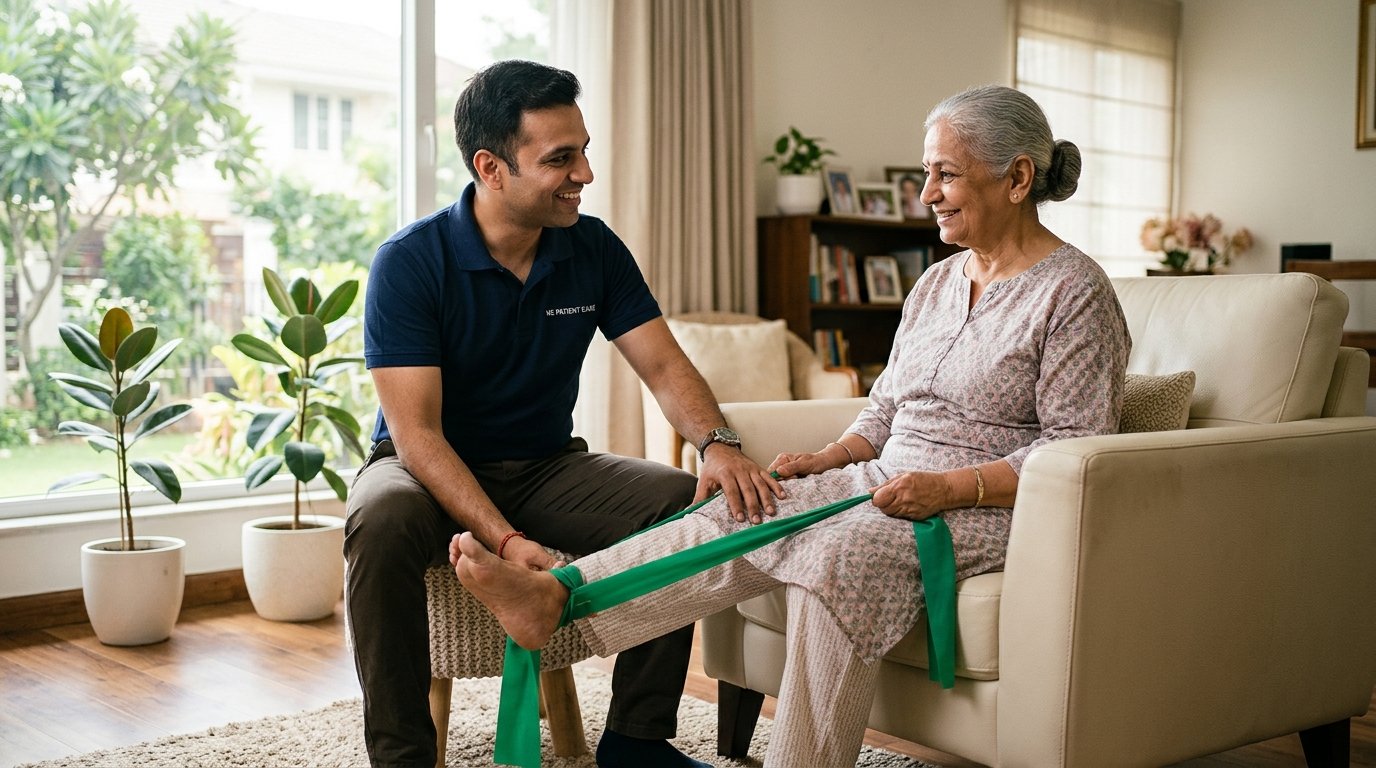
A stroke can suddenly alter a patient's motor control, balance, and independence. The first 3 to 6 months post-stroke represent the 'golden window of neuroplasticity'—where the brain is most capable of rewiring neural pathways through intensive rehabilitation.
Why In-Home Physiotherapy is Ideal for Stroke Patients
Transporting a hemiplegic or bedridden stroke patient to outpatient clinics causes immense physical fatigue and fall hazards. Home physiotherapy allows personalized therapy in familiar surroundings. Explore our certified Physiotherapy Visits at Home.
Core Rehabilitation Milestones
- Bed Mobility & Trunk Control: Rolling, bridging, and unsupported sitting to strengthen core stabilizers.
- Spasticity Management: Sustained passive stretching and electrotherapy (TENS/IFT) to prevent muscle contractures.
- Gait & Balance Training: Parallel bar walking, weight-shifting drills, and transition from wheelchair to walker.
- Upper Limb Fine Motor Recovery: Hand-eye coordination exercises and functional grasp restoration.
Need a qualified BPT/MPT physiotherapist in Delhi, Noida, or Gurgaon? Book a home assessment session today.
Frequently Asked Questions
As soon as the patient is medically stabilized in the hospitalu2014typically within 48 to 72 hours of stroke onset.
Many patients regain assisted walking within 6 to 12 weeks of regular daily physiotherapy, depending on the severity of the brain lesion.
Portable electrotherapy machines (TENS, IFT, Muscle Stimulators), resistance bands, hand exercisers, and goniometers.
Absolutely. Neuro-plasticity exists at every age. Tailored gentle exercises significantly improve transfer ability and prevent joint stiffness.
Typically 5 to 6 sessions per week during the active recovery phase, tapering down as independence is achieved.